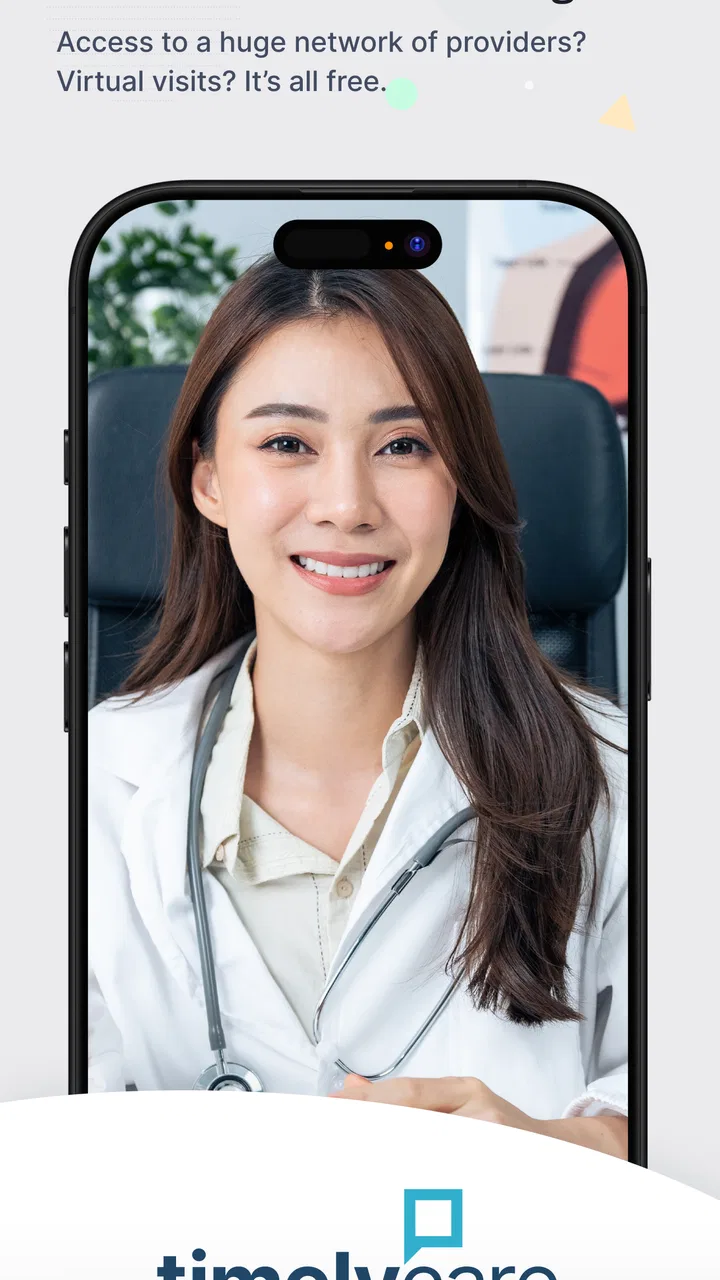
TimelyCare Health & Well-being
- 4.4
- Rating
- 50.00K
- Installs
- Free
- Price

 Analysis by App-foxy
When I first opened TimelyCare Health & Well-being, I understood its appeal quickly: it is a free medical app from Timely Telehealth, LLC that puts a route to care on my phone instead of making me begin with a search engine or a waiting-room visit. The promise is especially attractive when I need guidance outside ordinary office hours, because the service is designed for convenient access to care around the clock.
That convenience is the main reason to try it, but it is not the only question worth asking. A health app can feel useful for a week and then disappear into a folder. I wanted to judge whether this one could become a practical part of my routine, how much effort it demands, and where a traditional doctor, pharmacist, urgent-care clinic, or emergency service remains the better choice.
My overall impression is that this is best viewed as a care-access tool, not a replacement for every part of the healthcare system. It can reduce friction when I need a sensible next step, but its lasting value depends on whether I already have a reason to use its telehealth service. Without that need, the novelty fades fairly quickly.
You May Also Like

 Blood Strike: 2.5 Anniversary
Blood Strike’s Loadouts Turn Every Drop Into a Tactical Gamble
A close look at Blood Strike’s custom loadouts: how fast access to signature weapons reshapes its battle royale rhythm, rewards preparation, and narrows the gap between fights.

 Pandora - Music & Podcasts
Pandora’s Music Is Easy to Start, but Harder to Recover
Pandora’s strength is its low-effort path from a seed to a station. Its weak spot is how much confidence it asks you to place in connection, setup, and quiet recovery.

 8 Ball Pool
 Is Built on Rivalries, Rematches, and Routine
A close look at the rivalries, rematches, shared routines, and unanswered safety questions that turn a quick pool match into a persistent mobile community.

 Samsung Music
’s Quiet Strength Is Playing What You Already Own
Its reach comes less from spectacle than from dependable access to a personal library. That simplicity is both the app’s strongest retention engine and its ceiling.

 AccuWeather: Weather Radar
AccuWeather Review: A Quick, Clear Forecast for Everyday Decisions
For everyday plans, the best forecast is the one you can understand quickly. AccuWeather makes rain timing, radar, and local conditions easy to act on, with a few trade-offs.

 Hill Climb Racing
Why Hill Climb Racing Still Turns Crashes Into One More Run
A tiny car, a bumpy hill and one more upgrade: Hill Climb Racing keeps resurfacing because its simple chaos makes every near-miss feel personal.
More From Our News Desk
View All News


What the first week feels like
I find the first week most useful when I treat it as a chance to learn the route, not as a promise that every health concern will be handled the same way. Before I need help, I would note what information I can explain clearly and decide where I would turn if a remote conversation is not enough. That preparation leads naturally to the question of whether the app still earns space after the initial convenience wears off.
A straightforward reason to keep it installed
During the first week, the strongest benefit is mental rather than visual. Having a dedicated place for care can make the decision process feel less scattered. Instead of wondering which website, phone number, or clinic to try, I can start with the app and see whether the available care path fits the problem in front of me.
That matters most for concerns that feel important but do not obviously require an emergency department. A minor illness, a question that appears after a regular appointment has closed, or uncertainty about whether professional advice is needed can all create the same problem: I want direction before the issue becomes more disruptive. The app’s 24/7 positioning makes it relevant to those inconvenient moments.
I also like that the product belongs in the medical category rather than presenting itself as a general wellness tracker. That distinction affects expectations. I would not open it looking for a motivational exercise program, a detailed nutrition diary, or a replacement for a personal health record. I would open it because I want access to care and a clearer next step.
How I would use it in an everyday situation
Imagine noticing a worsening sore throat late in the evening. I might first check whether the symptoms suggest an emergency. If they do not, I could use TimelyCare as an initial route to professional help rather than waiting until the next morning to begin arranging an appointment. The useful outcome is not simply receiving an answer inside a phone; it is avoiding an unnecessary delay while still treating the situation seriously.
Another realistic use is a health question that appears while I am away from my usual clinic. In that situation, the app can be more convenient than trying to identify a nearby provider from scratch. I would still keep my regular doctor involved for ongoing conditions, medication management, and anything requiring a complete history. The app works better as an accessible front door than as my entire healthcare relationship.
One practical habit makes the first week more productive: I would install and open it before I actually feel unwell. That gives me time to understand the starting screen, prepare the information I normally need for a medical conversation, and decide whether it fits my situation. Waiting until I am tired or anxious is exactly when small setup frustrations feel largest.
Who benefits immediately
The app is a natural fit for people who value remote access, have unpredictable schedules, or dislike spending time searching for the correct care channel. It can also suit someone who wants a convenient option available outside a clinic’s usual hours. The Everyone age rating makes it broadly approachable as an app, although that should not be confused with every medical service being suitable for every person or every condition.
It is less compelling for someone who already has instant access to a trusted doctor and prefers every consultation to happen in person. It is also not the right first choice for severe symptoms, immediate danger, or a situation where physical examination and emergency treatment may be necessary. A telehealth app should never become an excuse to postpone urgent help.
Whether the value survives from month to month
For month-to-month value, I would judge TimelyCare by whether it remains a dependable option for the occasional awkward moment, rather than by how often I open it. A useful check is to revisit whether my usual care arrangements have changed: if I now have easy access to a clinician, the app may matter less; if after-hours access remains a gap, it may still be worthwhile to keep ready. That ongoing calculation also depends on how much upkeep the app asks of me.
Recurring usefulness depends on real moments
After the first month, the app’s value becomes less about discovery and more about readiness. I would not expect to open a medical-access app every day. That is actually a healthy sign: the goal is not to create another daily engagement habit, but to be dependable when a care need appears.
The recurring benefit comes from reducing the number of decisions I have to make under pressure. If I already know where to begin, I can spend more attention describing the issue accurately and following appropriate advice. This is a different kind of retention from a fitness or meditation app. The product earns its place through occasional usefulness, not constant entertainment or reminders.
That model has an important trade-off. A person may keep it installed for months without opening it, then suddenly find it valuable on an inconvenient evening. Another person may use it once, receive an answer, and decide that their regular provider is enough. Neither experience automatically means the app failed. The right measure is whether it is available and understandable when access to care becomes awkward.
How it compares with ordinary alternatives
Compared with calling a primary-care office, TimelyCare can be more convenient when the office is closed or appointments are difficult to arrange. A regular doctor still has the advantage of familiarity with my history and continuity over time. For recurring symptoms or a complex condition, that continuity is usually more important than speed alone.
Compared with searching symptoms online, the app offers a more responsible direction because it is built around access to care rather than an endless list of possible diagnoses. Online searching can be useful for basic education, but it can also increase anxiety and encourage self-diagnosis. A telehealth route is more valuable when I need help deciding what to do next.
Compared with an urgent-care clinic, the app may save travel and waiting when the issue is appropriate for remote attention. The clinic has a clear advantage when an examination, testing, treatment on site, or hands-on assessment is needed. Compared with emergency services, there is no meaningful contest in an emergency: immediate local help takes priority.
Questions I would settle before relying on it
I would first ask whether the service is available for my particular situation and whether I can use it when I need it, rather than assuming that every medical concern follows the same path. I would also think about what information I should have ready, such as a concise symptom timeline, current medicines, allergies, and relevant medical history. Clear preparation can make a remote consultation more useful.
I would also decide in advance what would make me stop using the app and seek in-person care. Worsening symptoms, uncertainty that cannot be resolved remotely, or a need for examination should all move me toward a clinic or emergency service. This boundary is one of the most important ways to use a telehealth app safely.
Finally, I would make sure I understand how it fits beside my existing care rather than treating it as a competing system. The best long-term arrangement may be using the app for convenient access while keeping a primary-care relationship for prevention, follow-up, and conditions that need consistent oversight.
Maintenance, friction, and the reasons fatigue can appear
The main fatigue risk, in my view, is not daily maintenance but having to make decisions while unwell: what details to share, whether remote care fits, and when to change course. I would make that easier by keeping a concise health summary accessible and choosing a quiet, private moment for a consultation when possible. Those small habits help, but they cannot remove the limits that make in-person care the better next step in some situations.
The maintenance burden is light, but not invisible
There is no reason for me to turn this into a daily routine. Its maintenance burden is mainly practical: keeping the app available, remembering how to start a care request, and keeping the health information I share accurate. That is easier than maintaining a tracker, but it still rewards a small amount of preparation.
I would periodically check that the app remains current on my phone. The current version is 3.0.8, and the minimum operating-system requirement is Android 7.0, which makes it accessible to many older Android devices. Even so, an older phone or outdated software can create avoidable trouble when I am already dealing with a health concern.
My best maintenance tip would be to keep a short personal note outside the app with medicines, allergies, major conditions, and the name of my usual clinician. I would not assume that a telehealth session automatically replaces a complete medical record. Having those details ready improves communication and helps me recognize when the app is not enough.
Where the experience can become tiring
The first source of fatigue is expectation. The phrase “24/7 access” sounds wonderfully broad, but access does not mean that every issue can be solved remotely at every moment. I still have to explain the problem, answer questions, and accept that the appropriate recommendation may be an in-person visit. If I expect instant resolution for every concern, disappointment is likely.
The second source is repetition. For occasional care, repeating basic information is manageable. For someone with a long medical history or an ongoing condition, repeating context through separate encounters may feel less efficient than speaking with a clinician who already knows the case. That is where a traditional provider can remain the better long-term anchor.
The third is emotional. When I feel ill, I may want a calm, obvious route rather than several choices or instructions. Any telehealth service can feel less reassuring than sitting with a professional face to face, especially when symptoms are ambiguous. I would judge the app by whether it helps me make a safer decision, not by whether it removes every uncomfortable part of being sick.
Privacy and responsibility in real use
Because this is a medical app, I would treat every session as sensitive. I would use it in a private setting when possible, avoid sharing more personal information than is relevant, and read the app’s current privacy and service explanations before relying on it. Those are not reasons to avoid the product; they are normal precautions whenever health information is involved.
I would also resist using it as a substitute for preventive care. A convenient consultation can help with an immediate question, but it does not automatically provide regular screenings, long-term monitoring, or the context that comes from an established clinician. The app is strongest when it fills an access gap, not when it is asked to carry the entire burden of healthcare.
Its public reception suggests that many people find the approach useful: it holds a 4.4 average from around 399 ratings, with roughly 56 written reviews and over 50 thousand installs. Those figures make it look established enough to deserve consideration, but they do not tell me whether it will fit my health needs. I would use them as a confidence signal, not as a substitute for personal judgment.
Who should keep it and who should skip it
I would recommend keeping TimelyCare available if I often need care outside normal office hours, travel frequently, or want a clear telehealth starting point for non-emergency concerns. It is also sensible for someone who understands its boundaries and is willing to switch to in-person or emergency care when remote help is not appropriate.
I would be more cautious about recommending it as the main option for someone managing complicated, ongoing health problems. In that case, the relationship with a clinician who knows the full history may matter more than convenient first contact. I would also steer someone with urgent or severe symptoms toward local emergency services rather than encouraging them to experiment with an app.
The free price removes one obvious barrier to trying it, and the Everyone content rating means the app itself is presented for a broad audience. Still, free access does not mean every consultation or care pathway will match every person’s circumstances. I would install it because it may simplify access, then judge it by the quality and suitability of the care route when I actually need it.
My long-term verdict after the novelty fades
After the initial appeal wears off, I do not see this as an app I would open for entertainment or daily motivation. Its lasting space comes from being ready at the right moment. That is a modest role, but an important one: a reliable starting point can be more valuable than a product that demands constant attention.
The developer, Timely Telehealth, LLC, has positioned the app around convenient medical access, and that focus gives it a clearer purpose than many overloaded health apps. I appreciate that I can evaluate it by a practical question: when I need care and my usual route is inconvenient, does this help me move forward responsibly?
My answer is yes, with limits. I would keep it installed as a backup and use it for suitable non-emergency situations, especially outside normal clinic hours. I would not abandon my primary-care provider, use it for emergencies, or expect it to replace hands-on assessment. Its real long-term value is preparedness, not daily engagement.
That makes it an easy recommendation for the right person, but not a universal one. If remote access solves a recurring problem in your life, the app has a good chance of earning permanent space on your phone. If you already have fast, trusted care everywhere you go, it may remain unused. In my experience, that is the honest test: not whether it feels impressive during the first week, but whether it removes a meaningful obstacle when an inconvenient health question arrives.
FAQs for TimelyCare Health & Well-being
01What is TimelyCare Health & Well-being?
TimelyCare Health & Well-being is a virtual healthcare and wellness platform designed primarily for students at participating colleges and universities. After signing in through an eligible institution, users may be able to access services such as virtual medical visits, mental health support, scheduled counseling, well-being resources, and health coaching. Available features can vary depending on the school’s plan, location, and eligibility requirements.
02Who can use the TimelyCare app?
Access is generally provided to students whose college or university partners with TimelyCare. You normally need to verify your school affiliation using an institutional email address or another approved sign-in method. Some services may have age, location, scheduling, or enrollment restrictions, so it is worth checking the details shown in the app before relying on it for a particular healthcare need.
03What healthcare and mental health services are available?
The exact menu depends on your institution, but TimelyCare may offer on-demand or scheduled virtual medical appointments, counseling, psychiatry-related support, emotional wellness sessions, health coaching, and self-guided resources. The app is intended for routine and non-emergency care rather than urgent crisis treatment. Review the service descriptions carefully because availability, appointment times, provider types, and referral options may differ.
04Does TimelyCare replace a doctor, therapist, or emergency service?
No. TimelyCare can be a convenient supplement for non-emergency health and wellness concerns, but it should not replace primary care, ongoing specialist treatment, or an established therapist when those are needed. It is also not intended for life-threatening emergencies. If you are experiencing severe symptoms, immediate danger, or a mental health crisis, contact local emergency services or an appropriate crisis hotline instead of waiting for an in-app appointment.
05Is TimelyCare free, and what should I know about privacy?
Many participating schools provide TimelyCare to eligible students at no additional charge, although coverage and service limits are determined by the institution. Before using the app, review its privacy policy, consent notices, and any information about medical records or insurance. You will need to provide personal and health information to receive care, so use a secure device and private connection, and confirm how your school and the provider handle your data.
Pros
- Free virtual care is available to eligible students through participating schools.
- Appointments can often be scheduled outside regular campus health center hours.
- Includes mental health support alongside general medical care.
- Secure in-app messaging helps maintain contact with providers after visits.
- Useful for students studying away from campus or living in another state.
Cons
- Access depends on your school’s participation and eligibility requirements.
- Some services may require appointments instead of immediate on-demand care.
- Provider availability can vary by location
- time
- and specialty.
- The app cannot replace emergency care or complex in-person treatment.
- Certain prescriptions
- tests
- or referrals may still require local providers.

TimelyCare Health & Well-being
Gallery